
LED Funding Programs in Germany
For energy-efficient LED lighting upgrades, the German federal government and the individual states offer a variety of funding opportunities. Below you will find an overview of selected programs.
Please note that application procedures and specific requirements vary depending on the funding scheme. Approval processes may also involve waiting periods. It is therefore advisable to review all eligibility criteria and requirements carefully before submitting an application.
Alternative to Funding: Rent Instead of Buy
Organizations looking to achieve savings more quickly are often better served by implementing an LED retrofit immediately. This can be done either through a direct purchase with a short payback period or through a rental model that requires no upfront investment.
This approach allows energy and operating costs to be reduced immediately rather than waiting for funding approval.
Table of Contents
Federal funding for efficient buildings (BEG/BAFA)
The BEG EM funding program is administered by the Federal Office for Economic Affairs and Export Control (BAFA) and is aimed at companies, municipalities, and other organizations. It supports individual measures to improve energy efficiency in existing buildings, including the conversion to energy-efficient LED lighting.
Objectives and requirements of the funding program
The Federal Funding for Efficient Buildings (BEG) provides companies, municipalities and non-profit organizations with support in renovating buildings that permanently save energy costs and thus protect the climate.
Requirements:
- The existing lighting system must be more than five years old.
- The new LED lighting must have a minimum lifetime of ten years.
- Involvement of an energy efficiency expert.
- Minimum investment volume of €2,000 net.
Technical Requirements:
- System luminous efficacy of at least 140 lm/W for LED strip lighting systems and 120 lm/W for other lighting systems.
- Luminous flux maintenance (L80) of at least 50,000 operating hours.
Who is supported?
- Businesses, including sole proprietors and municipal enterprises
- Local authorities, municipal associations and special-purpose associations, and legally dependent municipal enterprises
- Non-profit organizations, including churches
- Private individuals, homeowners' associations, and freelancers
- Other legal entities under private law, including housing cooperatives
What is being funded?
- Replacement of complete lighting systems (luminaire, light source, reflector/optics, cover)
- Installation of control and regulation technology, e.g., presence- or daylight-dependent controls
- Purchase, installation, and commissioning of eligible system components
- Deinstallation and proper disposal of the system components to be replaced
- Subsidies for LED lighting in combination with the modernization and replacement of luminaires.
How high is the subsidy rate?
- Funding rate: 15% of eligible expenditure for converting to LED lighting.
- Additional funding: 50% subsidy for specialist planning and construction supervision by energy efficiency experts.
- Maximum eligible expenditure: €1,000 per square meter of net floor area, up to a total of €5 million per project.
- Funding period: The directive entered into force on January 1, 2021, and ends on December 31, 2030.
National Climate Protection Initiative (NKI) – Municipal Guidelines
As part of the Federal Ministry for Economic Affairs and Climate Protection's national climate protection initiative, energy efficiency measures in the areas of outdoor and street lighting, indoor and hall lighting, and driveway lighting are being promoted. This ensures lower energy costs and greenhouse gas emissions. The funding is specifically aimed at municipalities, municipal companies, and non-profit organizations.
Objectives and requirements of the funding program
Who is supported?
- Municipalities (legally dependent businesses and other municipal institutions are not eligible to apply due to their lack of legal personality. Municipalities may submit an application on their behalf),
- Legally independent businesses and other institutions with at least 25 percent municipal participation, as well as special-purpose associations with municipal participation,
- Public, non-profit, charitable, and religious institutions – with the exception of the federal government – in the areas of education, preschool, school, or higher education, child and youth welfare, health, culture, nursing, care, accommodation, and social assistance – each for the respective institutions,
- Non-profit and charitable associations for the institutions they operate,
- Religious communities with corporate status and their foundations.
All eligible applicants are listed in Section 5 of the Municipal Funding Guideline (Kommunalrichtlinie).
Companies are also eligible to apply if they implement the project as contractors on behalf of a municipality or a municipal association. Further details can be found in Section 5.3 of the Municipal Funding Guideline.
What is being funded?
- Refurbishment of indoor and hall lighting.
- Refurbishment of outdoor and street lighting.
- Installation of control and regulation technology.
- The complete lighting system consisting of luminaire, lamp, reflector/optics, and cover.
- The purchase, installation, erection, and commissioning of eligible system components, including the necessary installation materials.
- The deinstallation and proper disposal of the system components to be replaced.
The approval period is usually 18 months.
How high is the subsidy rate?
- The grant amounts to 25 percent of total eligible expenditures.
- Financially weak municipalities and applicants from lignite-mining regions (according to can receive 40 percent of total eligible expenditures as a grant.
- Municipalities are considered financially weak if they can demonstrate participation in a state aid or budget stabilization program, or if their financial weakness is certified by the municipal supervisory authority.
- Applicants from lignite-mining regions do not need to provide separate proof to benefit from the increased funding rate. In this case, allocation via their postal code is sufficient. Please note that you must explicitly apply for the increased funding rate using the easy online form (see "Application Process and Application").
Federal Funding for Efficient Buildings (BEG EM) KfW Grant and KfW Loan
The Kreditanstalt für Wiederaufbau (KfW) offers low-interest loans for the energy-efficient renovation of buildings, including the conversion to LED lighting. These programs are aimed at companies and municipalities that want to invest in sustainable infrastructure.
Objectives and requirements of the funding program
Funding details:
- Financing contribution: Up to 100% of the investment costs.
- Repayment subsidies: Available depending on the program and measure.
Requirements:
- Compliance with minimum technical requirements. Proof of energy savings.
- Further information can be found on the KfW website:
Further state funding programs and special depreciation
In addition to the nationwide programs, some federal states offer their own funding programs for converting to LED lighting. These programs vary by state and are often aimed at sports clubs, schools, and other non-profit organizations.
Objectives and requirements of the funding program
Please note that certain requirements apply to these tax benefits and funding programs. We recommend seeking individual advice before implementing an LED renovation to identify and optimally utilize the funding opportunities that are right for your company or municipality.
Examples of state funding programs:
- Bavaria: SportFöR – Funding for sports clubs with subsidies of between 20% and 55% for LED lighting.
- Baden-Württemberg: WLSB Sportstättenbau – Funding for sports clubs with subsidies of 30% for LED lighting in indoor and outdoor areas.
- Hessen: Funding for club-owned sports facilities with subsidies for LED lighting.
Please note that the availability and conditions of these programs vary by state.
Special depreciation for energy-saving renovations
Companies that upgrade their buildings to make them more energy efficient can receive tax incentives. This includes measures such as converting to LED lighting. These investments contribute to reducing energy consumption and CO₂ emissions and can be deducted from their taxes.
Investment allowance for environmentally friendly systems
Companies can claim an investment allowance for investments in environmentally friendly and energy-efficient systems. This applies particularly to systems that contribute to improving energy efficiency, such as LED lighting systems. This allowance allows companies to reduce their tax burden while simultaneously investing in sustainable technologies.
Federal Ministry for Economic Affairs and Energy: Funding for greater energy efficiency
Are you looking for the right funding program for renovating your building, replacing your heating system, or implementing efficiency measures in your municipality or company? Find out more and benefit from the wide range of federal funding options!
Faster Than Funding:
Start Saving with Rent Instead of Buy
Because the switch to modern GLT LED TUBES typically pays for itself within just a few months thanks to significant energy savings, simple LED retrofit lamp replacements are rarely eligible for funding. Most funding programs focus on new lighting installations that involve replacing complete luminaires.
Organizations that do not want to wait for funding approval can often achieve savings faster with an LED retrofit upgrade—either through a direct purchase with a short payback period or through the GLT rental model with no capital commitment.
The GLT rental model allows you to upgrade your lighting during normal operations while benefiting from predictable monthly payments and lower operating costs from the very first month. Without technical or financial risk.
Why Rent LED Lighting Instead of Buying?
4 Key Benefits

|
No Upfront Invest & Full Liquidity • No capital commitment • Balance sheet–friendly implementation • Liquidity remains available for core business activities |
|
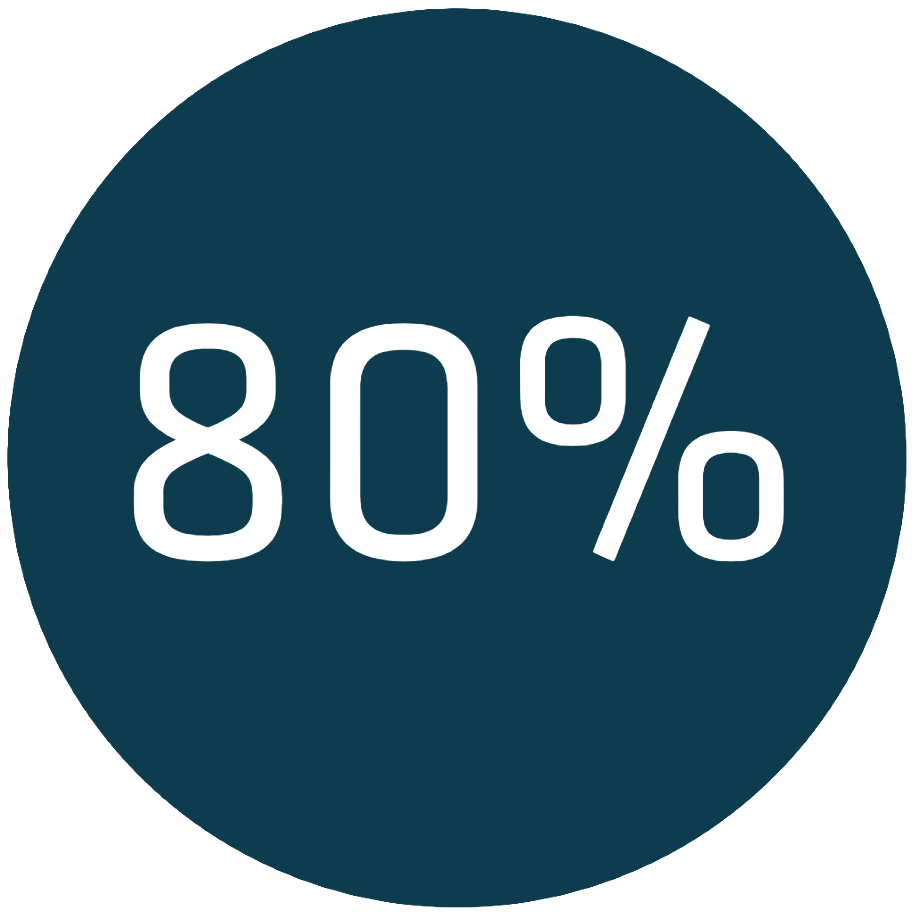
Save Costs and Energy from Day One • Up to 80% lower energy costs • Reduced maintenance costs • Immediate financial & economical benefits |

|
Predictable Costs • Fixed monthly payments (OPEX) • Full cost transparency throughout the contract term • No technical or financial risk |

|
Fast Upgrade & • Installation during ongoing operations • Installation by GLT technicians • Lighting compliant with current standards and best practices |
LED Rental in Practice: Savings Examples


Planning a conversion? We'll reply within 24 hours.
Get free consultation and a non-binding offer for your LED project.